By Kara MacKenzie
Editor's Note: This story includes references to violence that may be sensitive to audiences.
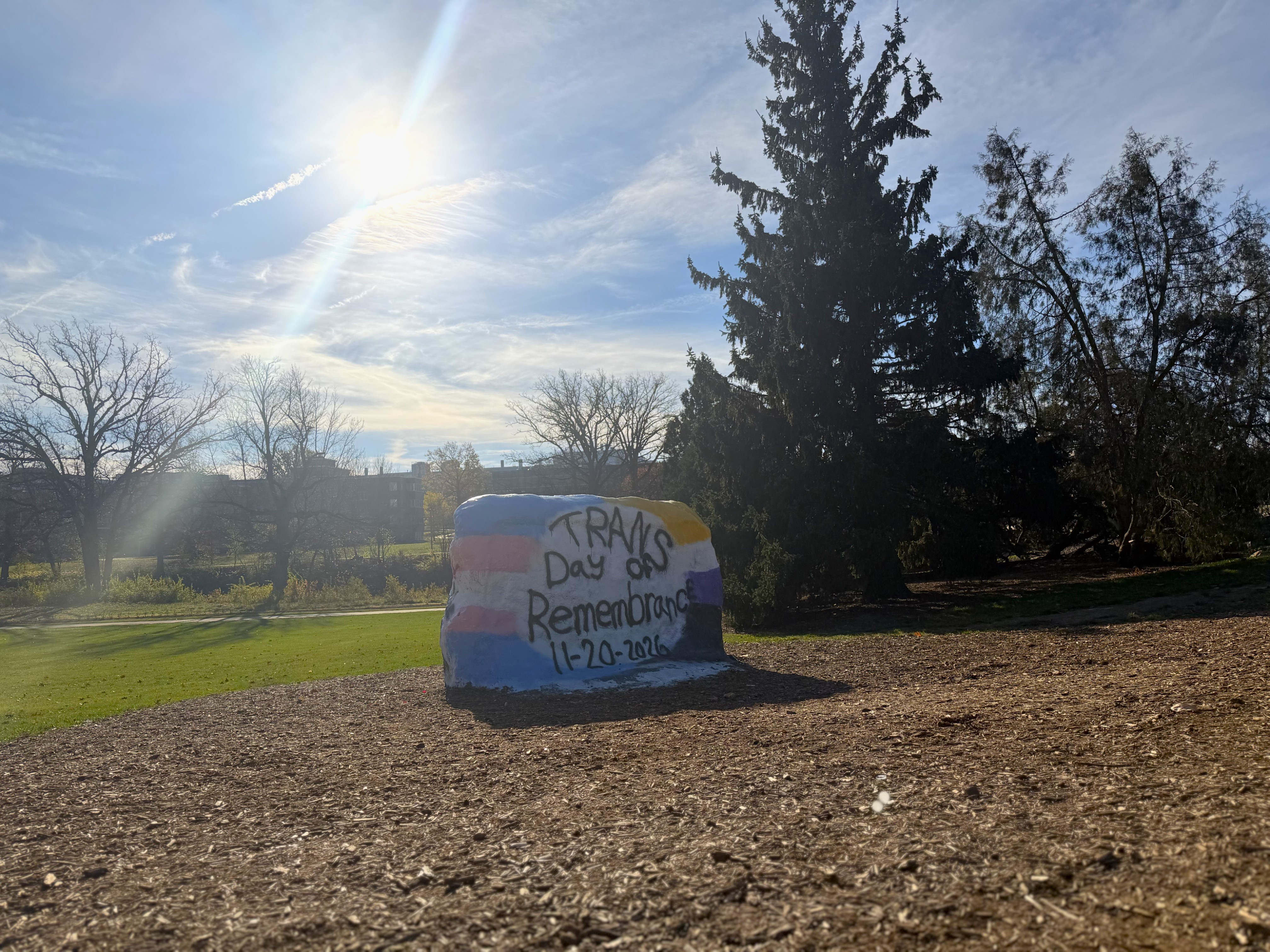
MSU observes Transgender Day of Remembrance, or TDOR, annually on or near Nov. 20. This day honors transgender individuals killed in anti-transgender violence and brings together members of the community to grieve their losses.
***
Since at least 2005, members of the MSU community have come together to observe Transgender Day of Remembrance. The tradition started in Boston and was cofounded in 1999 by Gwendolyn Ann Smith, a transgender activist, who held a vigil in honor of Rita Hester, a transgender woman who lost her life to anti-transgender violence in 1998.
This year, the MSU Gender and Sexuality Campus Center, or GSCC, continues the tradition by hosting their annual TDOR gala in partnership with the Salus Center, Lansing's only LGBTQ+ community center. Each year, the gala brings together students, staff, alumni, family members, elected officials and other community members to remember the lives taken by anti-trans violence.
According to student speaker Arlo Nietling, a junior wildlife ecology and management major, the diverse crowd makes this event unique and increases its impact, especially for young transgender people. "From an intergenerational standpoint, having it open to the community means trans youth can go to this. Trans elders can go to this. There's a way to look forward and be like, 'Look at this person living their life. They made it that far, so can I.'"
In addition to raising awareness and highlighting the lives and experiences of transgender people, the event is an opportunity for members of the community to grieve collectively, something that can be especially valuable for transgender individuals.
"Because trans people frequently either don't have connections with their family of origin or don't share important identities with their family of origin, we don't learn how to grieve together," explains Morgan Doherty of the GSCC. "And so, TDOR is a really critical place for us to build those community relationships that we aren't born into, and it feels like a powerful place to do that."
Transgender women of color experience disproportionately high rates of anti-transgender violence. For a predominantly white university such as MSU, this is another reason that TDOR being a wider community event is so important: it allows students to gather with those who may have different identities and remember those who paved the way before.
"The purpose ... is to make sure that our students see people who live lives that do not look like theirs, who have identities different than theirs, and understand that transness is a bigger tent and a larger community than just people who look like us," says Doherty. "This can be a part of expanding our sense of community, extending our empathy, and understanding the privileges that we may hold, and recognizing how much we've gained."
Although it is difficult to witness the dozens of names, biographies and photos of people who have died from anti-transgender violence, TDOR organizers say it is crucial to come together in remembrance.
"As much as it's a really painful event to go to, it also feels like a hug," says Nietling. "The amount of love that people you barely know will show for you, because everyone's there and grieving together, is amazing."