By Francisco Velazquez
A pioneering initiative at Michigan State University is proving that transformative global engagement doesn't require a passport, an international flight, or thousands of dollars.
For students preparing to enter an increasingly interconnected world—and for families hoping to see them thrive in it—MSU’s inaugural Global Leadership Program offers an accessible gateway to cross-cultural understanding. Launched this fall by the MOSAIC Center for Education and Outreach, the six-week virtual exchange ran from September through mid-November.
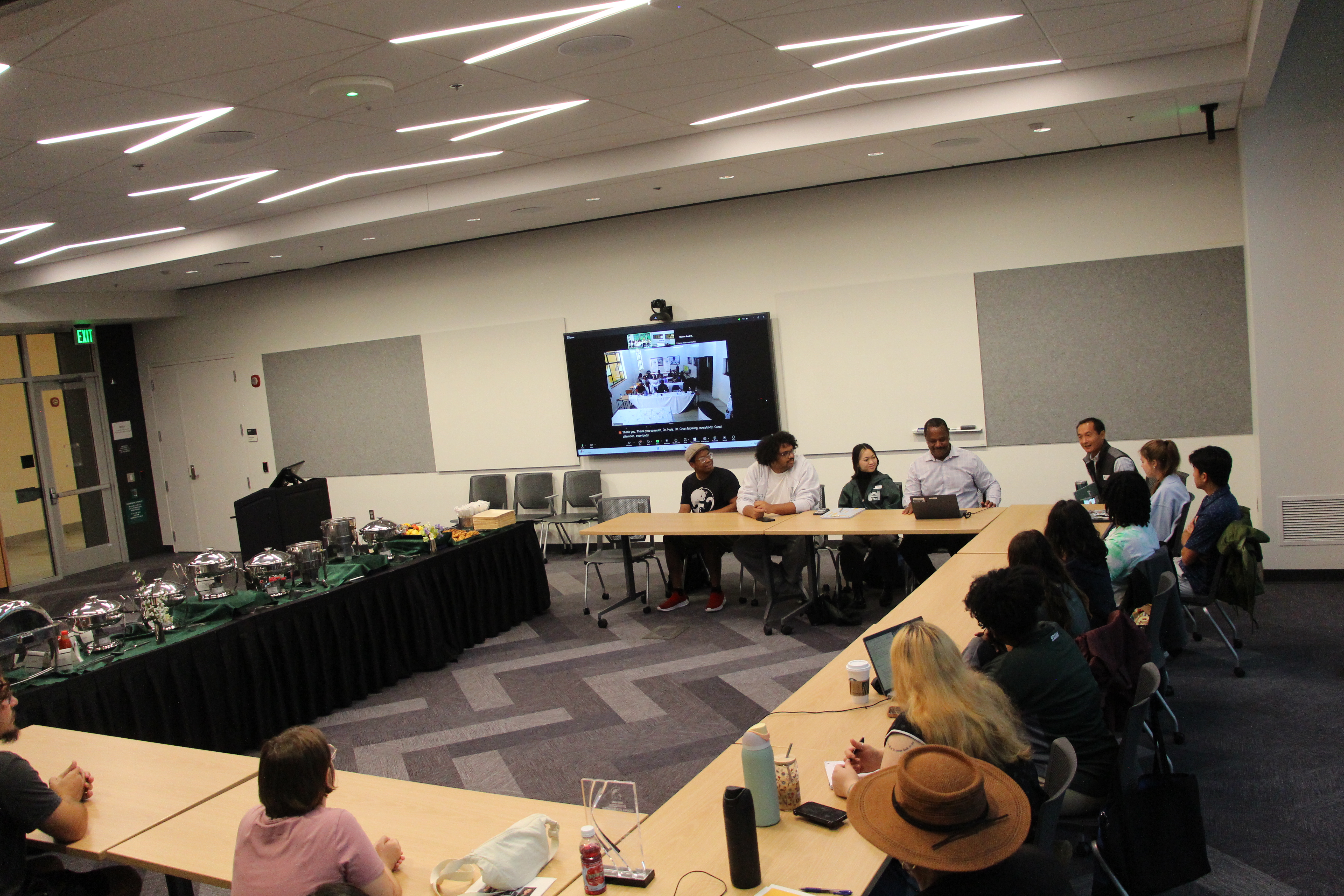
Bringing together roughly 18 MSU students and their peers from the Women’s University in Africa in Zimbabwe, the program was designed as a collaborative, project-based simulation. It allowed participants to build inclusive communities, explore different worldviews, and practice real-world leadership without ever leaving East Lansing.
The pilot Global Leadership Program strives to enhance students’ sense of belonging, engagement, and leadership as part of Student Affairs divisional ethos that tethers to the overall MSU 2030 Strategic Plan on Student Success. The program was funded in large part by the Creating Inclusive Excellence Grant (CIEG), supported by the Office for Inclusive Excellence and Impact.
Bridging the International Gap
The spark for the program ignited during a spring transitional training for student leaders led by Student Affairs staff member Sharron Reed-Davis, with MOSAIC Director Dr. Charlie Liu participating.
"Allowing student leaders the opportunity to truly dialogue with their peers and Student Affairs staff about how we can expand experiences and foster more academic accomplishments is important," said Liu. "Identifying that students need to be prepared for an increasingly globalized world allowed us all to consider the idea of somehow coordinating an intercontinental experience. We were excited."
Energized by that vision, Drs. Isaac Kalumbu and Liu brought the concept to the MOSAIC Center Advisory Board, co-designing the program with partners across campus. Namely, Dr. Brenda Nelson from Culinary Services, Dr. Jun Fu in Lean Enterprise and Assessment, and Sharron Reed-Davis, divisional staff in Student Affairs. More importantly, the pilot program involves MSU student researcher Michael Singler, NASPA Undergraduate Fellows Program (NUFP) to advance student success initiatives.
"I looked at the statistics, and it looked like 32 to 33 percent of our students are able to study abroad. That meant a large number of students were missing out on an important internationalization experience. We started to think: How can we bridge that gap? How can we give students an international experience without them leaving campus?"
While traditional Collaborative Online International Learning (COIL) courses are embedded within semester-long academic classes, the Global Leadership Program was built as a dynamic, co-curricular experience. Grounded in youth leadership development, it challenged students to grapple with issues that define their generation—from entrepreneurship and conflict resolution to climate change and cultural identity.
The partnership with the Women’s University in Africa grew naturally from existing relationships fostered by MSU’s African Studies Center. "It happened organically," Kalumbu explained. "When this idea emerged, we reached out to a trusted collaborator in Zimbabwe, and Women’s University in Africa became our ideal partner."
Breaking Down Barriers Through Shared Humanity
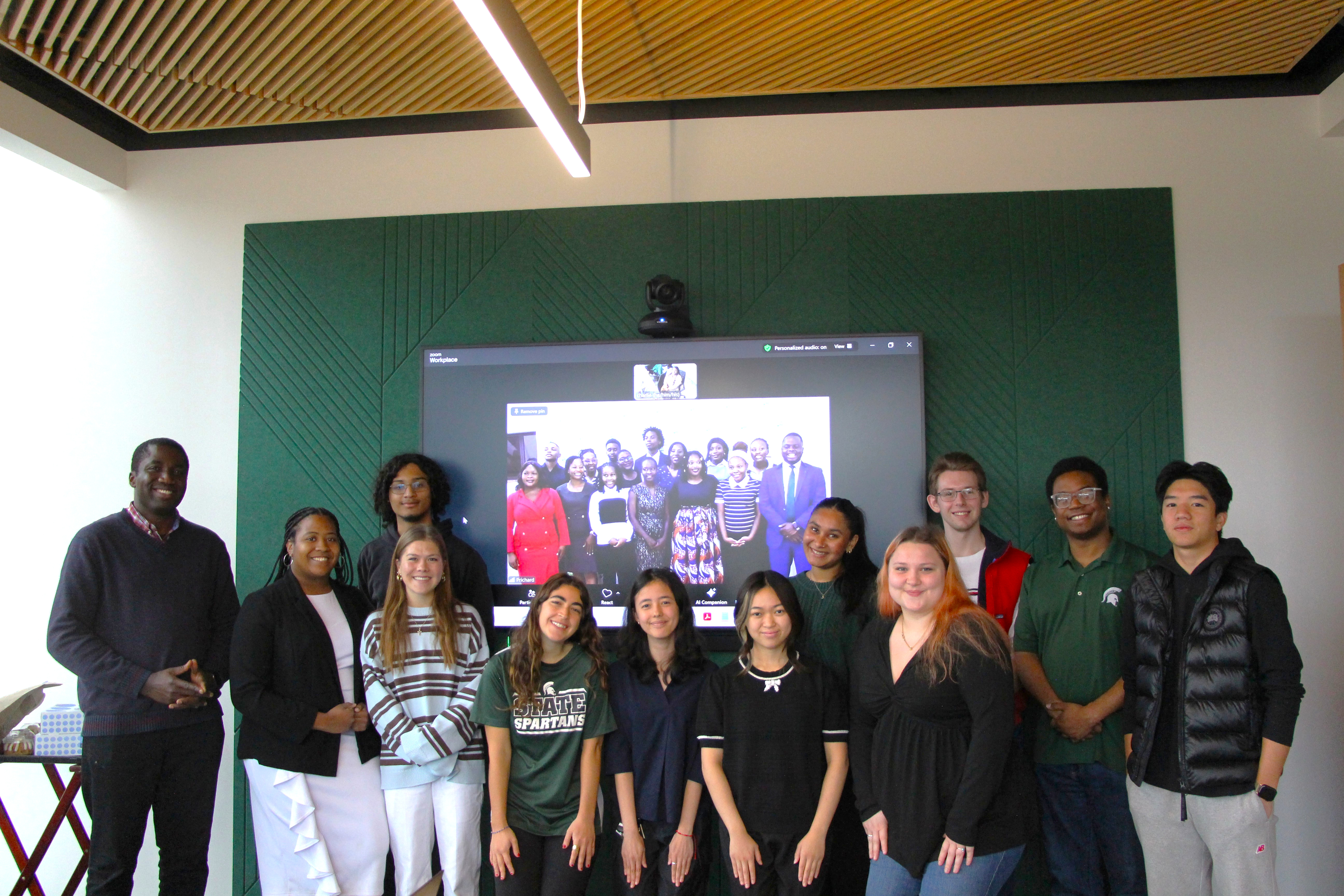
Across time zones and continents, the program’s sessions became spaces of genuine curiosity, empathy, and discovery. Students quickly realized that thousands of miles away, peers were navigating the same hopes, academic pressures, and questions about the future.
"I thought it was an amazing experience," shared Singler, who is also a fourth-year anthropology student at MSU, after an early session. "It was really cool how we were doing the same exact thing at the same exact time, even though we’re in two different parts of the world. Learning about how people cultivate food, raise their families, and celebrate traditions showed me that our relationships with culture are so different, yet so similar at the same time."
For Evan Dietrich, a third-year finance and economics major, those conversations reshaped how he views his future career in a globalized economy.
"There are so many cultural divides I can break down and understand," Dietrich noted. "What may be simple to me can be completely different for people in different cultures and areas of the world. Hearing about daily life in Zimbabwe reinforced how much there is to learn when you engage openly."
In Zimbabwe, students at the Women’s University in Africa felt that same profound sense of camaraderie, noting how simple conversations about daily life unlocked deeper lessons about leadership and purpose.
Tinotenda Hlomayi, a social work student in Zimbabwe, highlighted the cultural sharing sessions as a standout experience:
"My favorite part was learning about different cultures, especially the food and traditions. Being able to communicate, share ideas, and discuss topics with people from another country made me realize that distance does not have to stop people from learning from each other. Education should give us the confidence to think independently and use what we learn to make a difference."
Senior social work student at Women’s University in Africa, Felistas Katokwe, saw the exchange as a blueprint for how modern education should empower young people: "Education is a transformative process that shapes critical thinking, personal development, and societal responsibility. Connecting two worlds apart using technology taught me to be confident, open-minded, and adaptable. It strengthened my leadership skills and increased my interest in future international learning opportunities."
Aligning with International Students’ Day—and Looking Ahead
As the inaugural cohort wrapped up its final sessions this month, universities across the globe recognized International Students’ Day today, on Nov. 17. The Global Leadership Program embodies the spirit of global solidarity and inclusive education. At a time when society frequently debates the merits of rapid technological advancement, the program offers a clear reminder of how digital tools can be used for good—not to replace human connection, but to make it possible across oceans.
For Dr. Kalumbu, this fall’s cohort is just the beginning. It’s proof of a concept that could ensure every Spartan graduates ready to lead in an interconnected world, regardless of their background or financial circumstances.
"Let’s not throw away the baby with the bathwater, so to speak. There are some really good things about technology that we can build upon and get these fantastic results," Kalumbu said. "If we succeed here, it means we can succeed with a university in Rwanda, China, India, Ecuador, or Brazil. The leaders who will succeed tomorrow are those who can speak cross-culturally and build healthy, meaningful relationships across difference."