
By Brielle Tate, Animal Science/Pre-Veterinary Senior
Growing up in Cedar Springs (MI), I always knew I was Native American.
I am a proud member of the Spirit Lake Nation Tribe in North Dakota. Yet, for much of my life, I didn't fully understand what being Indigenous meant to me. I didn't grow up knowing many of our traditions, cultural medicines, or the significance behind things like ribbon skirts. My family simply hadn't passed much of that knowledge down.
My grandmother grew up on the Spirit Lake Reservation in North Dakota, where she was picked up by bus and taken away to attend boarding schools. There, she was taught to be ashamed of her culture and Indigenous identity. Those experiences followed her into adulthood. She eventually moved far from her home and community, hiding much of her culture, even from her own family.
It wasn't until after her passing that my mother learned my grandmother was fully Native and spoke Lakota fluently—she had spent decades hiding her identity. Boarding schools didn't just impact those who attended; their effects rippled down, leaving my mother and me generations removed from our own culture.
When I came to Michigan State University, I knew I wanted to learn more about my culture and meet other Indigenous students. During my first Sparticipation, I discovered the North American Indigenous Student Organization (NAISO). I almost missed their first meeting because I had planned to go home that weekend, but I decided to stay a little longer. Looking back, it was one of the best decisions I've made.
I began attending nearly every NAISO meeting and event. At Native Welcome, I met students who would become some of my closest friends. I celebrated Indigenous Peoples' Day for the first time, attended the Powwow of Love, and developed friendships that extended beyond the organization.
At first, I struggled with feeling like I wasn't "Native enough." Meeting other Indigenous students made me realize how much I didn't know, but no one ever made me feel like I didn't belong. Instead, they welcomed me, shared their knowledge, and encouraged me to learn. NAISO became a place where I could explore my identity without feeling like I needed to prove it.
One of the most meaningful parts of this journey has been sharing it with my family. My mother has attended the past two Powwows of Love at MSU, and my father joined us for the most recent one. My mom is learning more about our culture through my experiences, too.
I often think about the difference between three generations of my family: my grandmother was taught to hide her identity, my mother grew up without much of that cultural knowledge, and now I have the opportunity to openly celebrate it with my family beside me.
By my second year, I stepped into student leadership. Over the past three years, I’ve served in executive roles across the Powwow of Love, AISES, and today as Co-Chair of both NAISO and AISES.
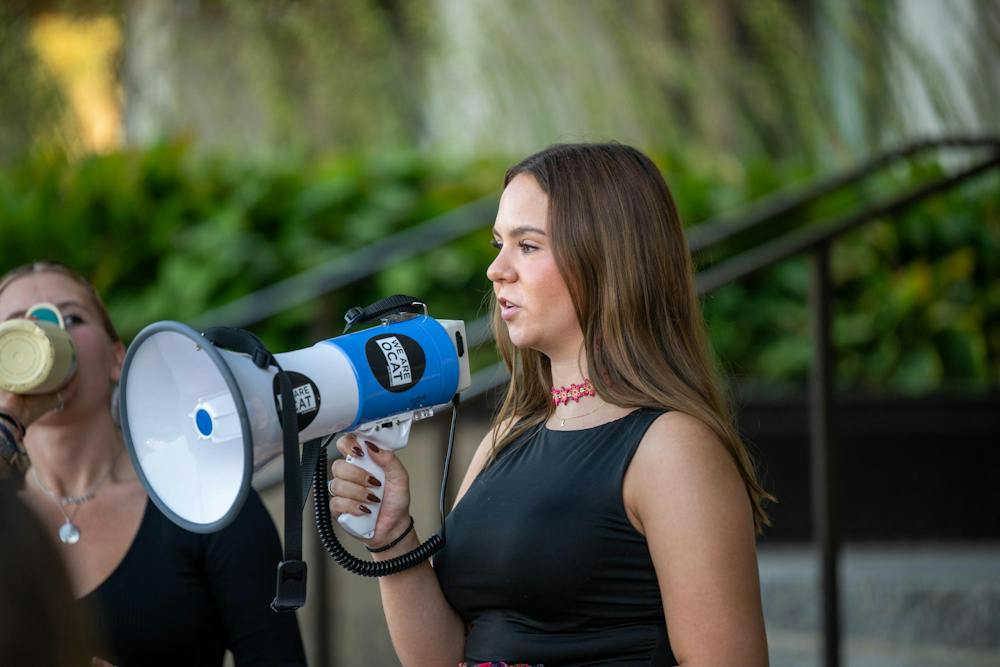
Leadership has shown me how important Indigenous representation and advocacy are. As a senior studying Animal Science and preparing to apply to veterinary school, I recognize how few Indigenous students I know pursue similar paths. I have also learned how much support exists beyond campus through Indigenous faculty, alumni, and members of the Lansing community who continue to encourage our success.
Yet leadership has also exposed our ongoing struggles. As a small community, funding shortages and limited resources make planning difficult. While we deeply value our supportive Indigenous faculty and community allies, that level of understanding isn't always shared across the broader university.
Our organizations are more than student clubs. They provide spaces where students can learn, reconnect, and find belonging. I know how important those opportunities are because they changed my own college experience.
My understanding of Indigenous Peoples' Day has also changed significantly. Growing up, I knew the day as both Columbus Day and Indigenous Peoples' Day, but I didn't celebrate either. That changed when I came to MSU.
During my first Indigenous Peoples' Day on campus, NAISO painted a beautiful mural on the Rock. After spending the day celebrating our community, we returned to find that it had been painted over with a message referencing Columbus. I remember feeling angry and disappointed that a day meant to celebrate our cultures had been met with such disrespect. That experience reminded me why Indigenous recognition and advocacy remain so important.
One phrase I first heard at MSU was "We Are Still Here." Over time, those words have taken on a much deeper meaning. As I approach graduation, I hope NAISO continues to grow, and that future Indigenous students find the same sense of belonging I did. I especially hope MSU continues to embrace the cultures that make this university what it is, while also recognizing the difference between saying you value a culture and taking meaningful steps to support it.
When I think about my grandmother's past, my family’s re-connection, and the painted mural on the Rock, the phrase "We Are Still Here" carries profound weight. It is not just about surviving historical erasure; it’s about celebrating who we are today and demanding that recognition extend far beyond a single calendar day.