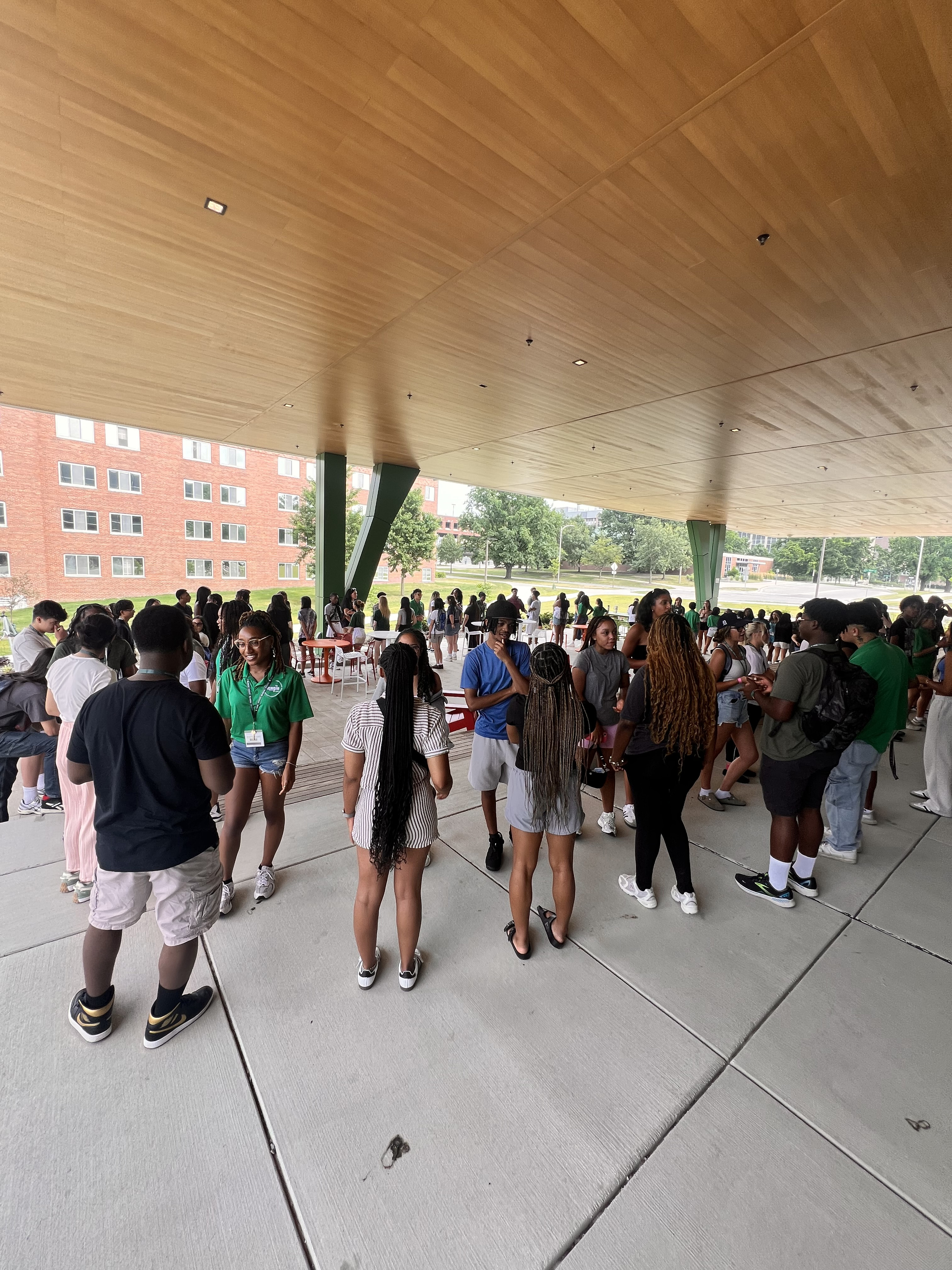
For 30 years, Michigan State University's Maximizing Academic Growth in College (MAGIC) program has helped incoming students build confidence, form connections and prepare for success before the start of the fall semester.
This summer, the program celebrated its 30th anniversary, welcoming another group of future Spartans during two weeklong sessions in late July, ahead of the start of the new year. Designed to ease the transition from high school to college, MAGIC provides students with opportunities to become familiar with campus resources, develop academic skills and build relationships with peers and mentors before classes begin.
Murray believes the research that shows comfortability plays a big role in student retention.
"We've been able to provide that support before their college career began," said Murray Edwards, founder and coordinator of the MAGIC program as well as the current assistant director of the Office of Enrichment and Advocacy. "We've been able to move the needle in terms of student success and student achievement."
Established in 1996, MAGIC grew from efforts to support incoming students as they transitioned to Michigan State. Edwards said the program developed from the College Admission Achievement Program after university leaders recognized the need to provide students—while open to all, the program initially focused on those from underserved communities—with additional support and preparation before they began their college careers.
For the 2025 cohort, over 68% of participating students earned a 3.0 GPA or higher in their first semester. With several hundred students participating each year, the program has impacted thousands of Spartans who would ultimately become alumni.
While MAGIC has evolved throughout the past three decades, its focus on helping all students find support and community has remained central to the program. Part of that work has included intentionally connecting participants with campus entities, resources, and other opportunities to become involved on campus.
"That's why we made sure we connected them to the student organizations," Edwards said. "That way they get an opportunity to get a sense of what their community looks like. This is what our student organizations do for our particular community."
This year's program gave incoming students an opportunity to experience campus life before the academic year began in late August. Throughout the program, participants engage in academic enrichment, connect with university resources and begin building relationships that can continue long after the program ends.
For Francisco Velazquez those relationships have lasted more than two decades and remain MAGIC's greatest impact on his life. The former MAGIC participant credits the program with giving him the strong start he needed to eventually graduate from MSU and now serves as a staff member on campus.
Velazquez participated early in MAGIC's history as a first-generation student looking for help adjusting to life at Michigan State. He entered the program hoping to become familiar with the university, learn about resources and meet other incoming Spartans. He is still in contact with fellow participants, some of whom became close friends and eventually felt more like family.
"It's not only making friends. It was growing into adulthood with others who were there to support me and I, them," Velazquez said. "Little did I know then that some of the people I met so long ago now would still mean very much to me today."
MAGIC also helped Velazquez understand the demands of college before his first semester began. As a student who worked while attending school, lessons about time management became especially valuable as he learned to balance academics, work and life away from home.
The program ultimately offered more than practical preparation.
"The MAGIC staff genuinely care about the success of students like myself," Velazquez said. "It's vital to feel supported because college can be very difficult for first-gen students and those navigating this new institution, these new processes."
Years later, Elena Sweeney arrived at MAGIC in 2023 with many of the same uncertainties about beginning college.
Sweeney joined the program because she did not know many people attending MSU and was unfamiliar with campus. During the program, she practiced networking and asking thoughtful questions, learned how to navigate campus and began forming connections before her first semester.
"MAGIC introduced me not only to excellent resources around campus but also to plenty of kind and driven individuals who I'm in contact with to this day," Sweeney said.
Those connections helped make a large university feel smaller.
"They were instrumental in making me feel like I belonged at Michigan State," Sweeney said. "The endless kindness and support I received from the OMEA staff was such a difference maker because they made me feel like I had a family on campus that cared about me and supported me."
The experience helped build her confidence and shaped her involvement at MSU. She later joined OMEA as a student staff member and became involved with Culturas de las Razas Unidas, an organization she said she would not have known about without MAGIC. She now serves alongside some of those peers on boards and committees.
"MAGIC gave me a second home at Michigan State," Sweeney said. "I went from being an incredibly nervous and unsure incoming freshman who wasn't sure if Michigan State was my place to someone who was certain I had found my home away from home."
Thirty years after the program began, the experiences of participants across generations reflect a common thread: relationships, preparation and a community of support before the first semester even begins.
For students entering the program today, Velazquez encourages them to embrace that opportunity.
"Open up, expose yourself, listen and become a bit vulnerable to the experience," Velazquez said. "Ask questions, whatever you need to do to feel capable and assured that this is a place for you too."
Sweeney offers similar advice.
"MAGIC matters because people and relationships matter," Sweeney said. "The program they put together is focused on setting students up for success in college and beyond and it has certainly done that for me."